→ March 23 to May 28, 2026
In the Impatients Exhibition Hall
5800 Saint-Denis Street (Suite 702), Montreal
→ April 9–12, 2026
Grand Quay, Port of Montreal
As part of the Plural Art Fair
200 Commune Street West, Montreal
Nids communs
Projet commun X Les Impatients X Plural

In L'art impossible, Geoffroy de Lagasnerie explores the idea of an “ethics of artworks” by examining the relationship between artists and exhibitions and the political and social reality that surrounds them. By highlighting the systems of power that organize our world, he suggests that our very existence within these structures implies our active participation in their construction and transformation. He then poses a fundamental question: “Is art that transcends shame possible?”
In reflecting on the purpose of art and its (non)utilitarian nature in the face of inequalities that have persisted throughout the ages, Lagasnerie offers a perspective: “If we do not want to be ashamed of culture in the eyes of the world, culture must draw from the world and its actions within it to give meaning to its existence. ”
This opens up a vast field of reflection on artistic and curatorial practice, particularly on its potential to function as a performative mechanism, serving as a catalyst for a more just collective life. How can we create, exhibit, and disseminate works that have a genuine impact on society, and on what values should these works be based? Can artistic and curatorial practice become a framework where the idea of community is not merely conceptualized, but negotiated in real time and built with a view to sustainability?
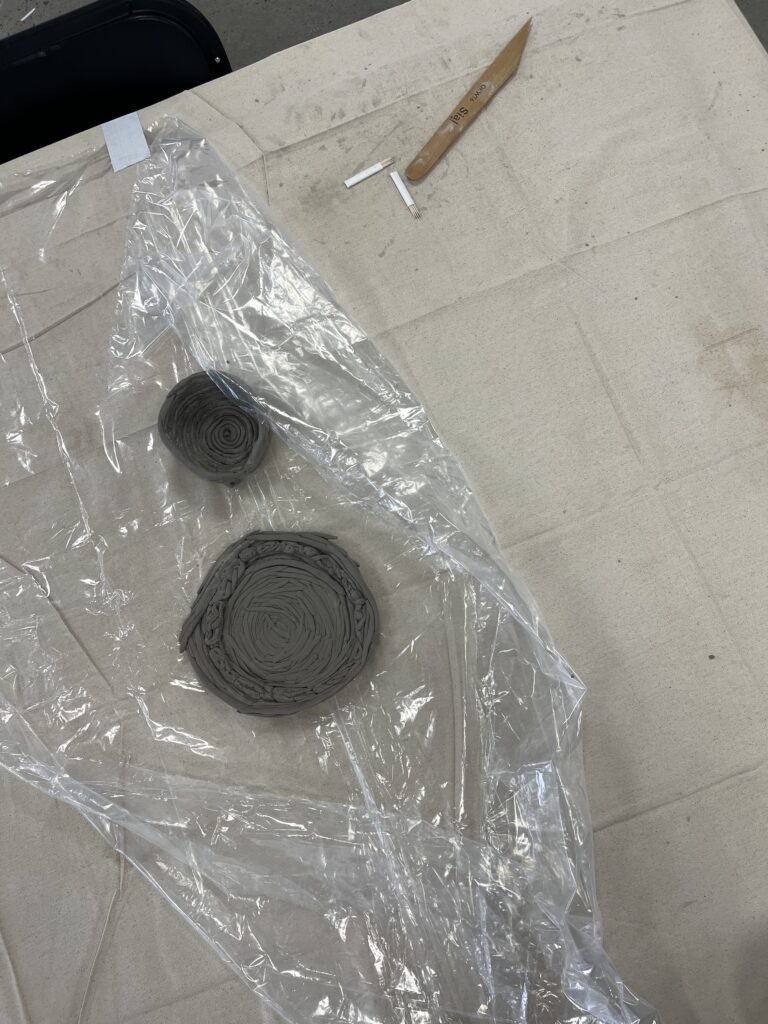
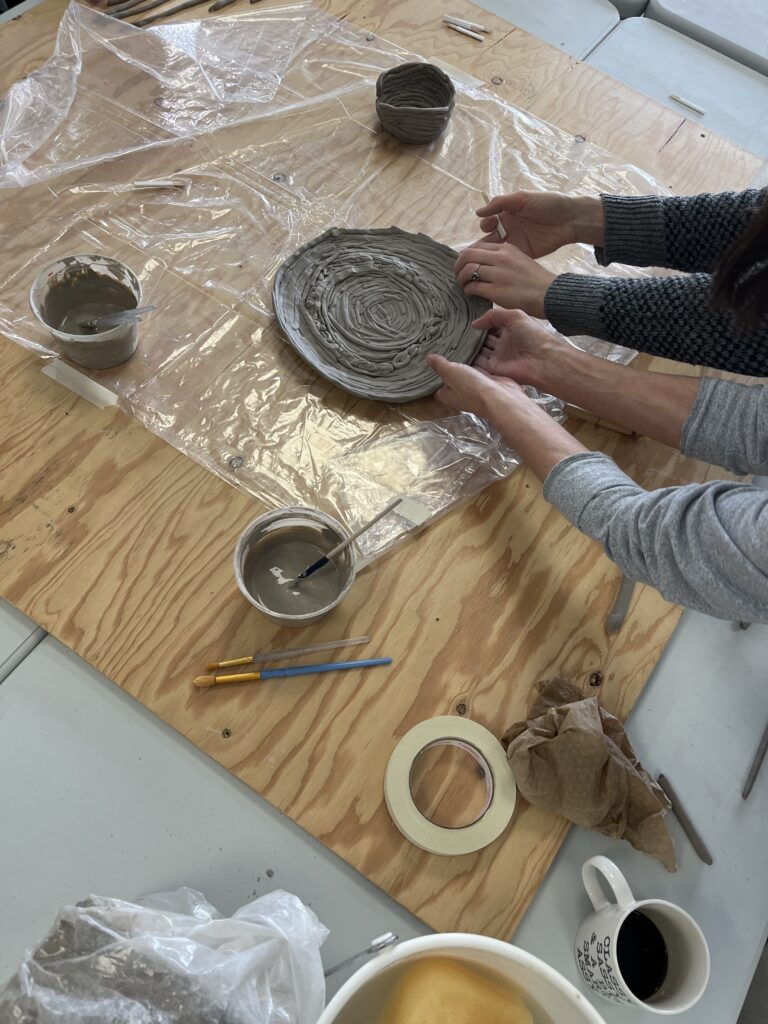
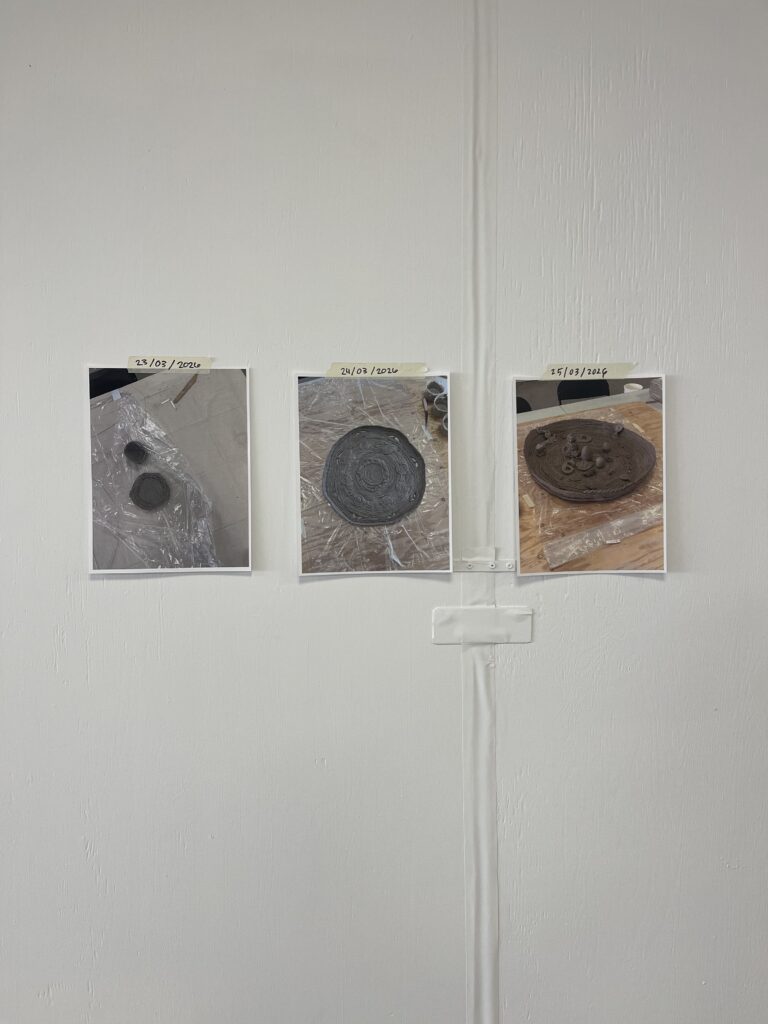
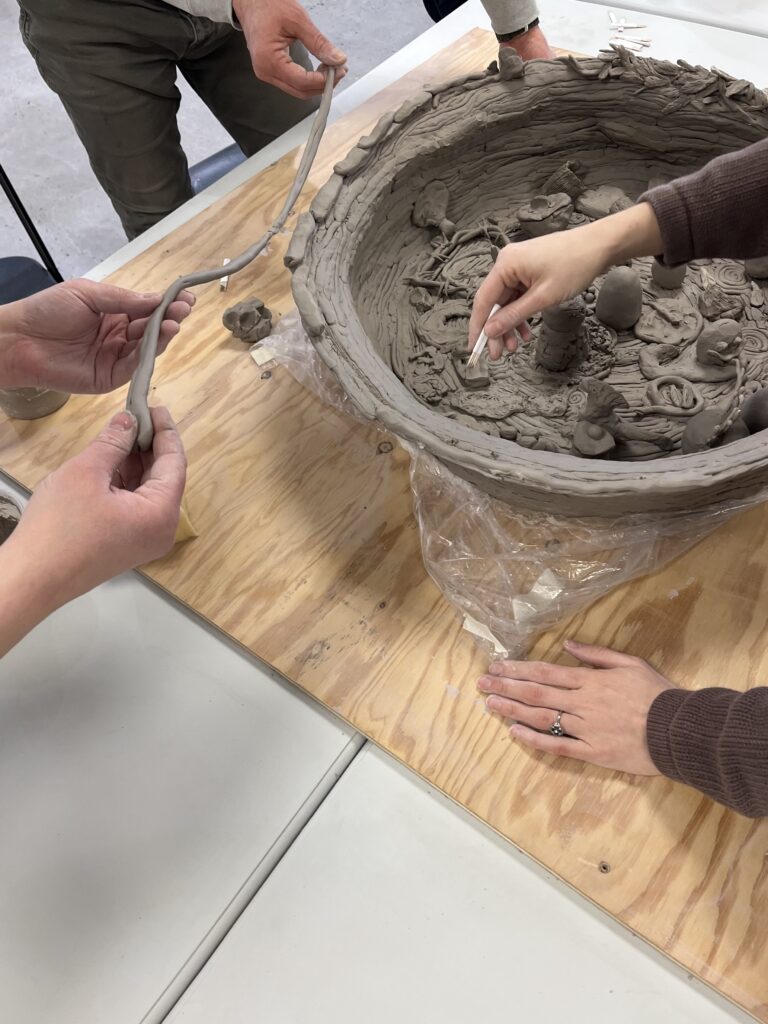
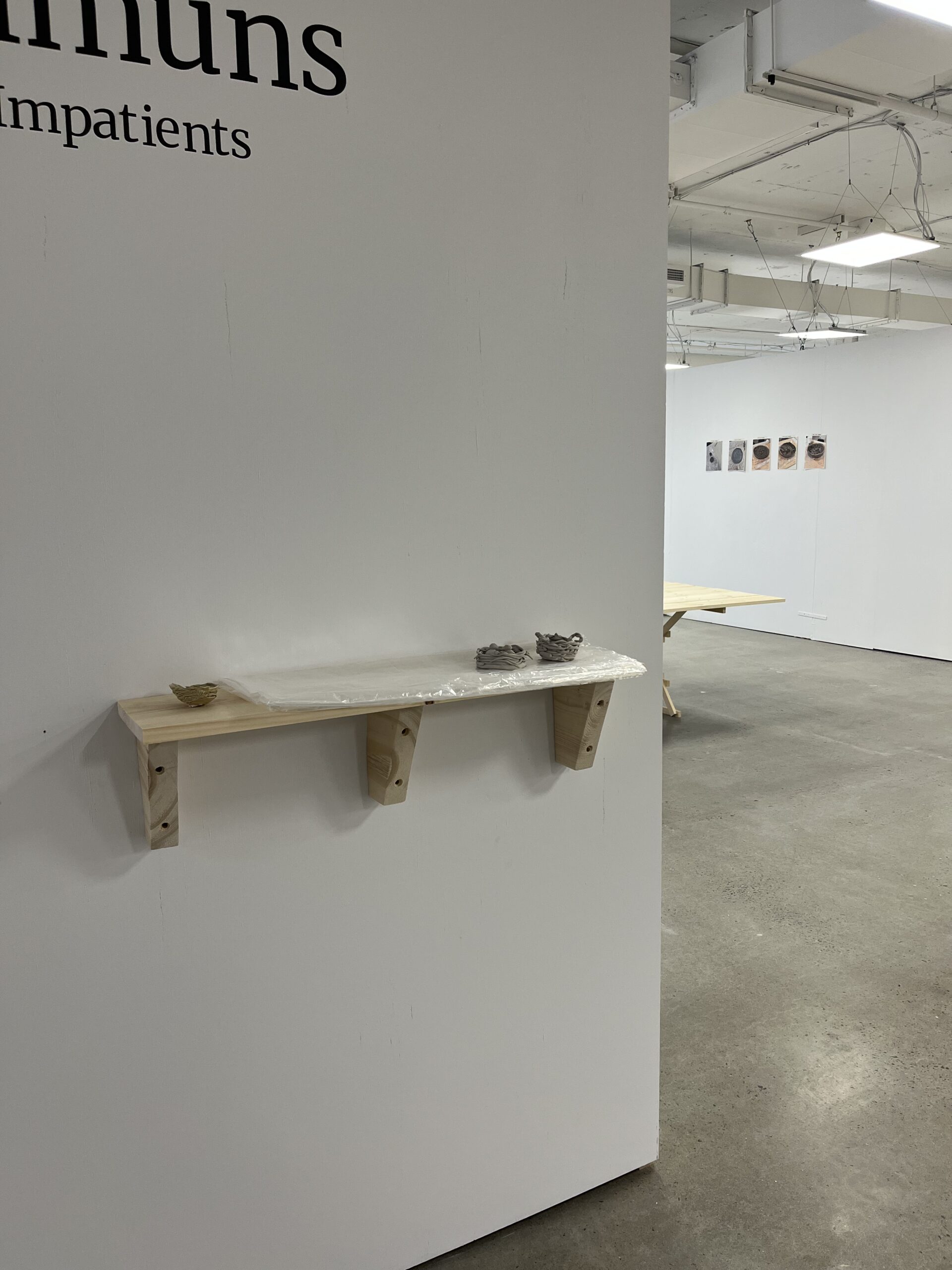
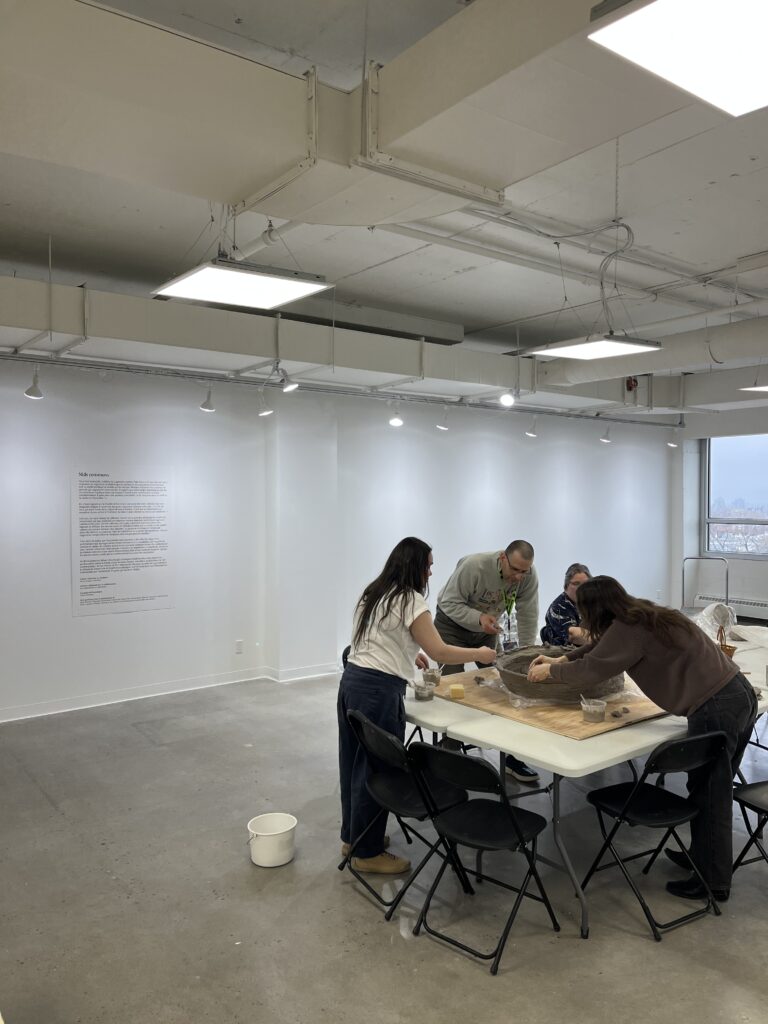
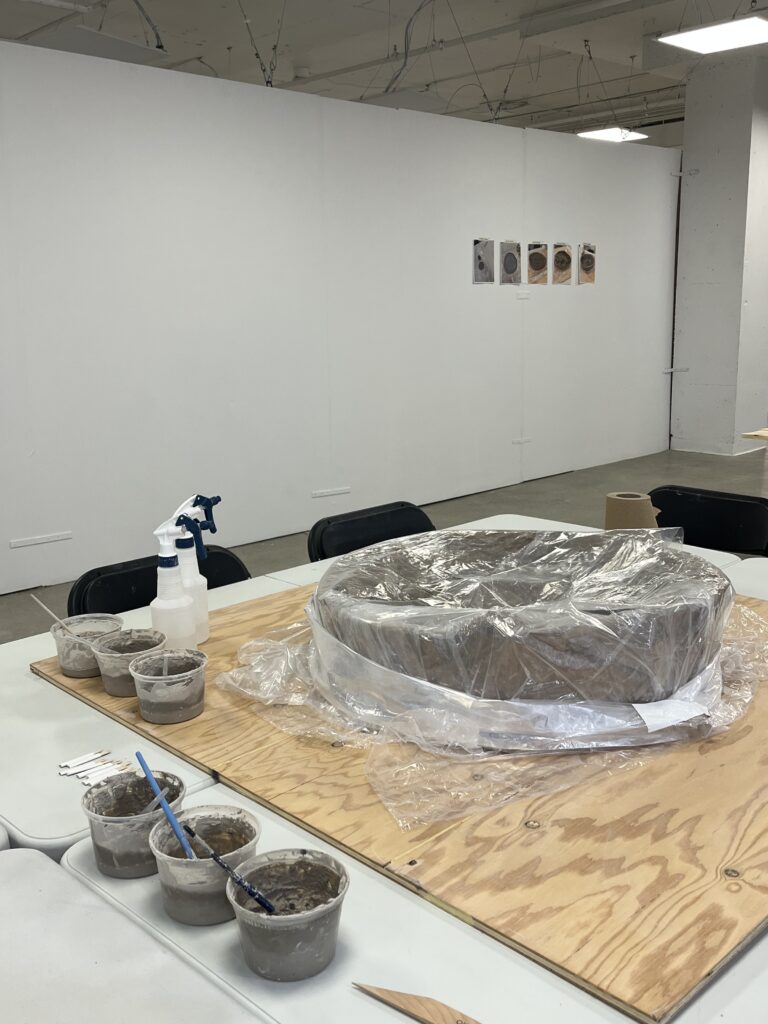
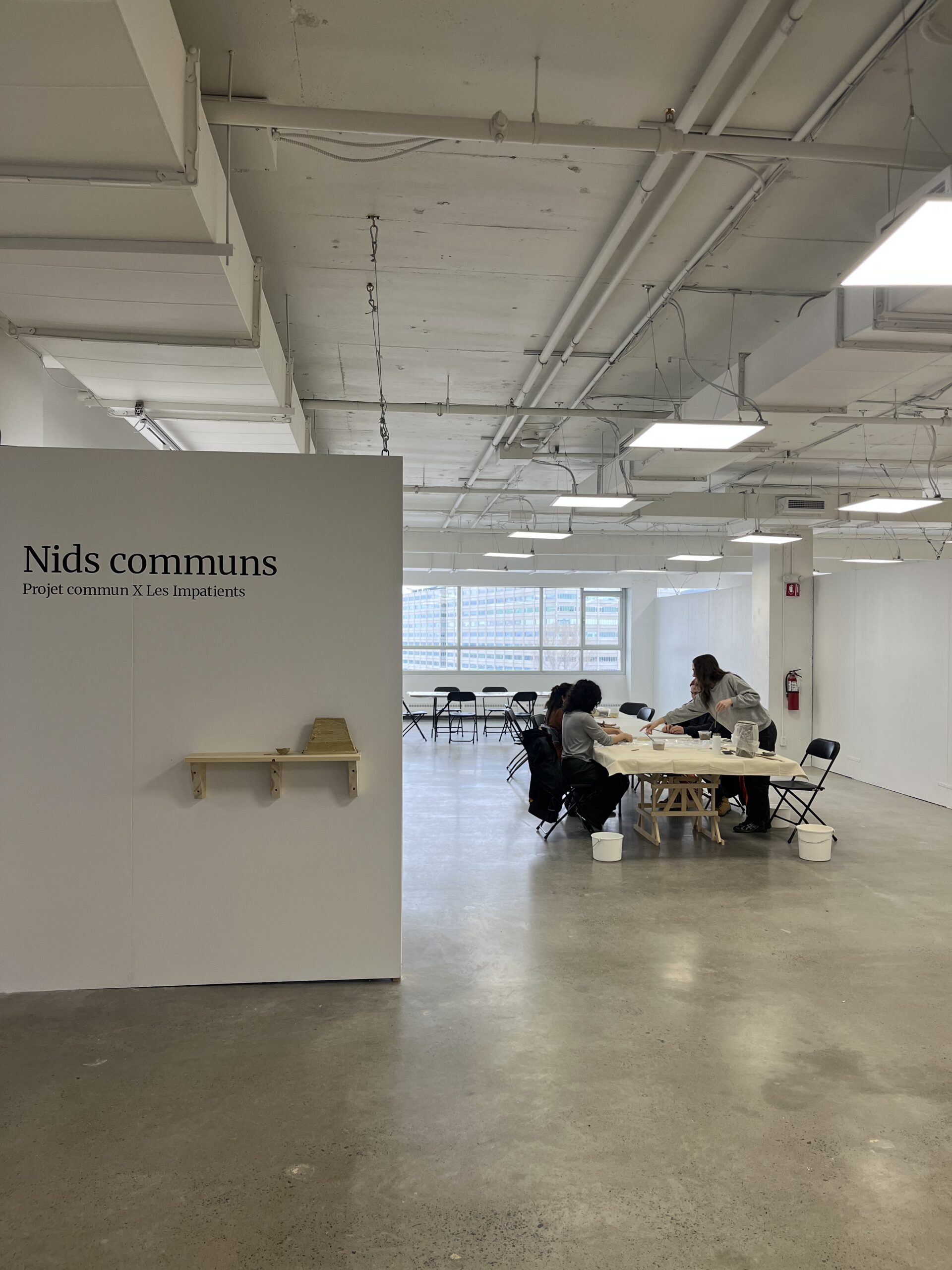
It is in this spirit that the exhibition Nids communs has been carefully conceived. Born out of a partnership between the organizations Projet commun and Les Impatients, it takes the form of an open creative workshop in a state of constant transformation. In collaboration with ceramic artist Orise Jacques-Durocher, the participants are working together to create a monumental piece, composed of a multitude of gestures intertwined with one another, while the material retains the traces of these encounters.
Developing outside traditional art circuits, this performative exhibition takes the form of a social situation. Blurring the boundaries between contemporary art, art brut, and relational art, it places interactive engagement and shared experience at the heart of its concept, while fostering individual empowerment through the autonomy of the gesture that shapes the clay.
Artist in residence
Orise Jacques-Durocher
Contributing artists
Les impatientes et impatients
Curator of the exhibition
Sarah Turcotte
With gratitude to
Enzo Rouxel, Charlotte Guirestante Ghomeshi, Marie-Pier Aubry-Boyer, Manon Desserres, Valérie Duval, Miori Lacerte, Frédéric Palardy and the artists leading the workshops

LES IMPATIENTS
The organization Les Impatients was founded in 1992 by Lorraine Palardy with the mission of supporting people living with mental health challenges through artistic expression. Every week, its team offers approximately 100 creative workshops in visual arts, music, and theater to nearly 1,000 people across Quebec.
Presented since 1999, the Parle-moi d’amour benefit exhibition is one of Les Impatients’ major fundraising events. It brings together works by professional artists and workshop participants, as well as donations from private collections, which are auctioned off in a silent auction. The funds raised enable the organization to continue its mission. This benefit exhibition also offers participants the opportunity to share their art with the community and, in doing so, raise public awareness about mental health and its impact on our lives.
In addition to holding one of the largest collections of unconventional art in North America (15,000 works), Les Impatients is a leading authority in the healthcare sector. The organization is affiliated with 19 hospitals and is supported by the Association of Psychiatrists of Quebec, which endorses its mission and recognizes the importance of its work.

ORISE JACQUES-DUROCHER
Orise Jacques-Durocher is a visual artist who lives and works in Montreal, where she completed her studies in visual arts at Concordia University (2020). Her material and theoretical research and experimentation have developed notably through residencies at centers such as the Guldagergaard International Ceramic Research Center in Skælskør, Denmark (2019) and Est-Nord-Est in Saint-Jean-Port-Joli (2026).
Her work has been featured in group and solo exhibitions in Quebec, New Brunswick, and Europe (England, Denmark), as well as in events such as the Foire Plural with Projet commun (2024, 2025, 2026) and the Printemps du MAC organized by the Fondation du Musée d’art contemporain de Montréal (2024).
She also teaches ceramic shaping in community settings and works as a studio technician, occupations she considers closely linked to her artistic motivations.
Artistic Approach
My experimental practice in ceramics falls within the fields of sculpture and installation. It revolves around a desire to give prominence to objects and their creation in order to examine material realities. In my research, I am particularly concerned with the contexts in which we create, focusing specifically on issues related to labor and the material conditions of existence. Consequently, my sculptures are shaped as much by their contextual realities as by my hands; they are imbued with modest, poetic, and political details as well as practical difficulties.
I develop a personal approach by freely blending elements of fiction, utopia, and abstract sculpture, striking a balance between seriousness and innocence to explore fundamental, critical, and romantic themes with rigor and a subtle, wry smile. Often created in series, my sculptural projects draw on a variety of references: literary, philosophical, and sociological, as well as those related to everyday objects and stories. The forms, sometimes abstract or semi-figurative, reproduce shifts in function or scale and materialize my research by functioning as metaphorical nods (a birdhouse displayed in a white cube, a closed handbag, an abstract basket, a massive piece of jewelry).
In the studio, as in life, my work evolves through a steadfast commitment to processes that are intentionally slow, laborious, and engaging. My choice of methods—ranging from the most mundane to the most extravagant (shaping thin clay coils for hours, smashing a sculpture with a hammer, applying a glaze)—leads me to cultivate a close relationship with the material and the subjects it embodies, making my work the visible trace of this intimate dialogue. I employ experimental material processes, which I develop first from reflections on the intimidating permanence and vigor of ceramic material, but also out of a sense of necessity—of making do with what is at hand—and curiosity. For example, I have devised a process that involves finely crushing my own finished works to create new ones. The crushed fragments are mixed with clay, engobes, or layers of glaze that I prepare and apply to the surface of the works, creating an intriguing texture that blurs our perception and understanding of the material. The strange materiality, and the labor evident in the texture and forms, prompt reflections on preciousness, labor, and productivity in a context marked by speed and precariousness.
By its very nature, my approach is driven by a deliberate commitment to sharing knowledge and experiences, which is fostered in particular through collaboration and community-based teaching initiatives. These shared initiatives are intertwined with my artistic motivations. They foster a sense of community, inspire engagement and creativity, and aim to have a liberating effect, while also celebrating the exceptional experimental possibilities of my medium, ceramics. I actively explore new avenues of research that integrate community engagement into the very fabric of my practice.